Blog · For anyone running an atomizer · 3 min read
Content Atomizers: What They Are and the One Rule That Makes Them Worth Running
An atomizer turns one recording into six finished pieces, and the only rule that matters is that it changes nothing on the way out. The check is literal: point at every claim in the output and find the sentence it came from in the input. If it doesn't trace, cut it.
Published August 27, 2026
An atomizer is a device that turns liquid into a fine mist. Perfume bottles use them. So do humidifiers and spray paint cans. You put one substance in and it comes out spread across a much wider surface, but it's still the same substance.
The AI version does that to your content. You put one thing in, a blog post or a YouTube script, and it comes back as several finished pieces without you rewriting any of them. That's the whole idea, and the name is doing real work here, because the mist is still the liquid. Nothing new got added on the way out.
It works on bigger inputs too. A 40 page industry report goes in one end and comes out as a slide deck. Run that same report through NotebookLM and you get a narrated video instead. The input doesn't have to be small and the outputs don't have to be text.
The part people skip is the rule that makes one of these worth having.
An atomizer is meant to preserve the original. It moves your ideas into new formats and doesn't change them. That sounds obvious written down, and it is the single thing most setups get wrong, because a language model asked to turn a blog post into a LinkedIn post will happily improve the argument on the way through. It'll add a statistic that wasn't in your draft. It'll sharpen a claim you deliberately left soft. It'll invent a customer example because the format seemed to want one.
The second it starts inventing claims you never made, you're cleaning up after it instead of shipping. That's the trade that kills these things. You built the pipeline to save yourself an afternoon, and now you're reading five outputs closely enough to catch a fabricated number in each one, which takes longer than writing the five pieces yourself would have.
So the rule is preservation, and everything about how you build one follows from it.
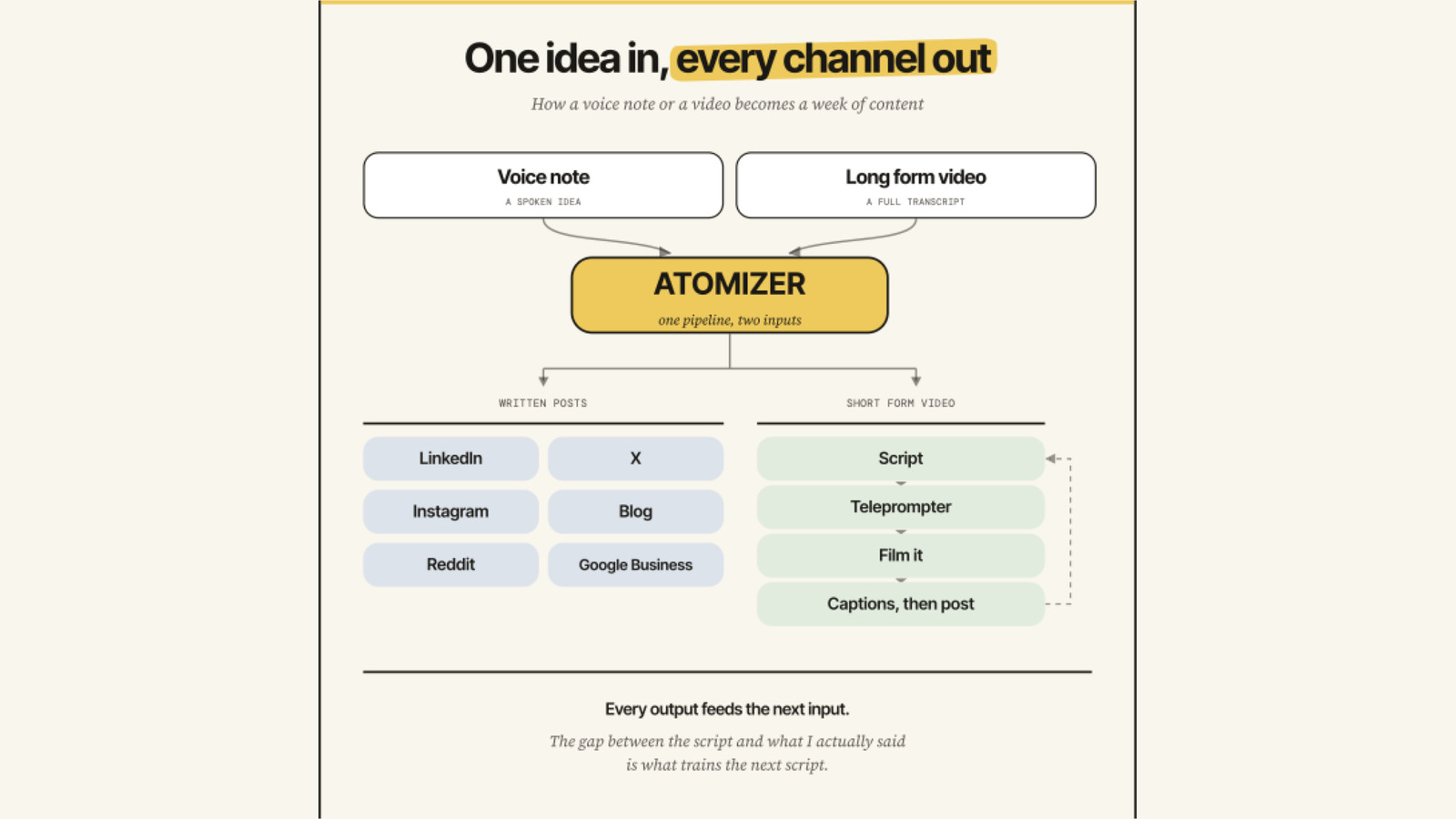
I run an atomizer for my own videos. One recording becomes the YouTube upload, a blog post, and posts on four channels. Six finished pieces from one afternoon of filming, and I don't rewrite any of them by hand.
It stops and waits for me before any of it goes public.
That approval gate is not a nice-to-have I bolted on because I'm cautious. It's the thing that makes the rest of it safe to run. An atomizer without a stop is a machine that publishes claims under your name that you have never read, across every channel at once, and the first time it invents something you'll find out from a reply rather than from your own review.
The gate costs me a few minutes per batch. Reading six pieces and clicking through is not the work. Writing six pieces is the work, and that part is already done by the time I look at them.
Here's the check I run on each one, and it's simpler than it sounds. Point at every claim in the output and find it in the input. Not "does this sound like something I'd say", because a good model will always clear that bar. Find the actual sentence it came from. If a number appears in the LinkedIn version that isn't in the video, it's not a summary of the video anymore, it's a new post with my name on it.
Most of the time everything traces back and I approve the batch. When something doesn't trace, I cut it. I don't ask the model to fix it, because a model that invented a claim once will invent a different one when you ask it to try again, and now you're in a loop reviewing revisions instead of shipping content.
Done right, an atomizer does that and nothing else. One idea in, several formats out, same argument in each of them, and your afternoon back.
Done wrong it turns into a load of useless AI jargon. You get five posts that all say a version of "in today's fast-paced landscape" and none of them say the thing you actually meant when you sat down to record. That's not a content system. That's a machine that takes something specific you made and returns something generic with your name on it, faster than you could have made the generic thing yourself.
The name is the spec. Mist, not a different liquid.